Hotel CRM: the key to the new era of loyalty and direct sales
A hotel CRM is no longer just a marketing tool—it’s a strategic growth engine. In an increasingly competitive market, the ability to capture, segment, and activate guest data is key to increasing direct bookings, reducing acquisition costs, and building long-term loyalty.

For years, the hotel industry has been heavily dependent on intermediaries: OTAs, TTOOs and metasearch engines, which have been strategic allies in ensuring occupancy. However, this dependence has limited something fundamental: control over guest data.
Today, the context is different. The market has matured in three key dimensions:
- Accelerated digitalisation of guests.
- The gradual disappearance of third-party cookies.
- Increased acquisition costs in payment channels.
In this new scenario, a hotel’s most valuable asset is no longer just its location or online reputation. It is its ability to capture, structure and activate key guest data.
This is where the concept of hotel CRM ceases to be a tactical tool and becomes a strategic decision.
Why is having a good hotel CRM no longer optional?
In other sectors — retail, e-commerce, banking — CRM is at the core of the business. It allows you to understand the customer, anticipate their needs and personalise every interaction.
In the hotel industry, however, adoption has been slower for several reasons:
- A large proportion of bookings come from intermediaries.
- Companion data is rarely captured correctly.
- Reception processes have traditionally been manual.
- Many generalist CRMs are not designed for hotel operations.
The result has been an obvious paradox: hotels receive thousands of guests a year… but do not always build a direct relationship with them.
A CRM designed for hotels changes this logic.
From database to strategic asset: the change in mindset
It is not simply a matter of “accumulating emails”. It is about building an ecosystem where data:
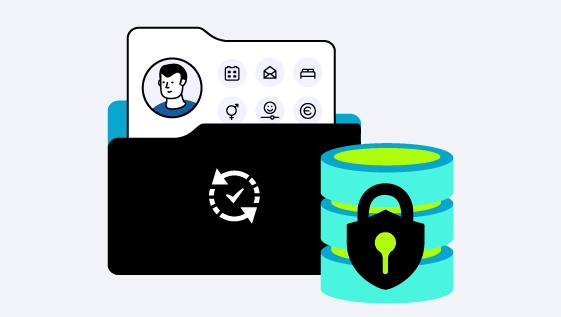
- Is verified and complies with GDPR.
- Is automatically integrated with the PMS and booking engine.
- Is enriched with real information about the stay.
- Enables advanced segmentation.
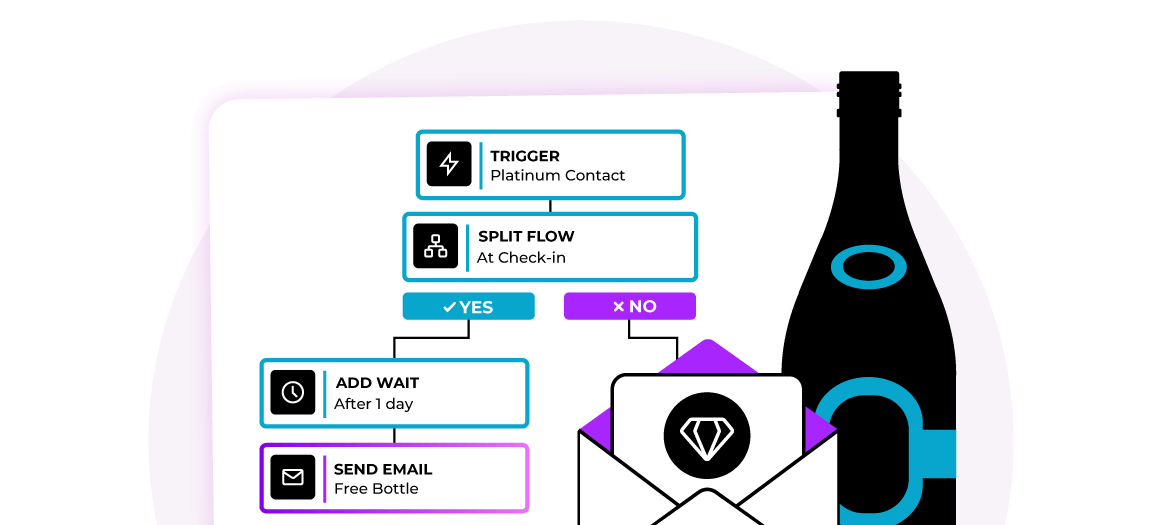
- Activates automatic flows based on events and behaviour.
The qualitative leap occurs when CRM ceases to be a tool for sending newsletters and becomes:
- A real micro-segmentation system.
- A behaviour-based automation engine.
- A direct driver of hotel disintermediation.
Hotel loyalty: from points programmes to hyper-personalisation
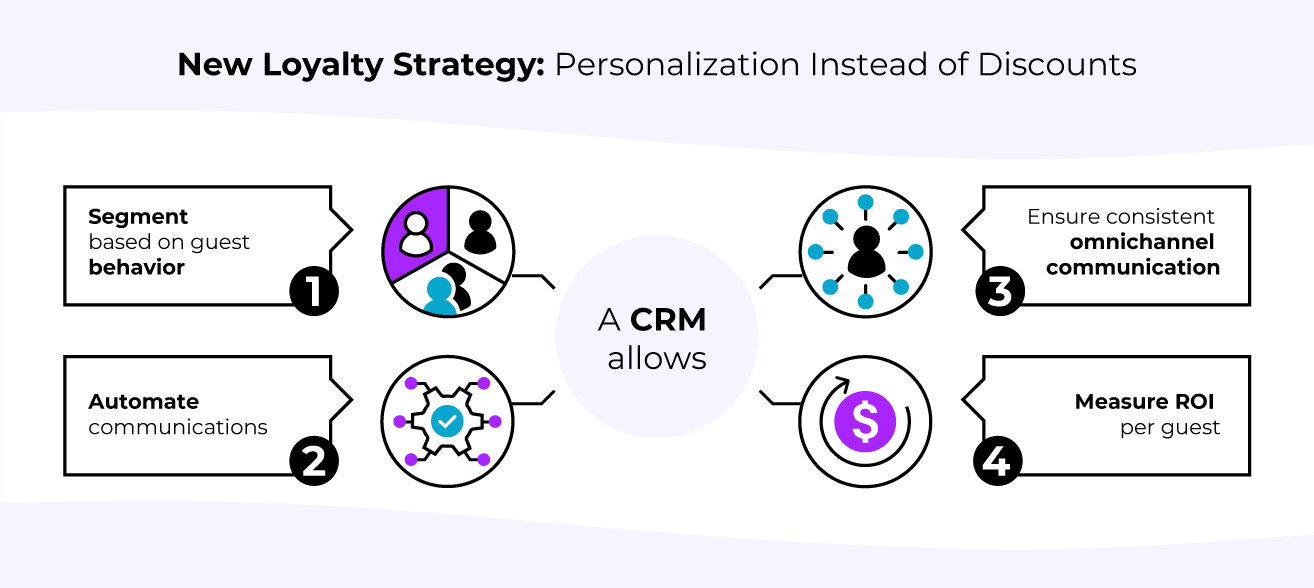
Traditional hotel loyalty has been based on discounts or points programmes. But today’s guests expect something more sophisticated.
A hotel CRM allows you to work on loyalty from four angles:
1. Segmentation by actual behaviour
A repeat OTA guest is not the same as a repeat direct channel guest. Nor is someone who travels with their family the same as someone who travels for business.
2. Automation by events
- Personalised pre-stay.
- Segmented upselling.
- Recovery of inactive guests.
- Post-stay sequences.
3. Consistent omnichannel communication
Automated, segmented and measurable email marketing.
4. Measurement of actual ROI
Tracking by guest, not just by campaign.
This level of sophistication is impossible without an architecture designed specifically for the hotel sector.
The challenge for chains: multi-property complexity
For chain managers, the challenge is even greater. It is not just a matter of managing guests, but also of coordinating:
- Multiple hotels.
- Different source markets.
- Various regimes and typologies.
- Differentiated pricing strategies.
A modern hotel CRM must allow for:
- Multi-property architecture.
- Automatic tagging by hotel and channel.
- Global view of the chain and individual view by hotel.
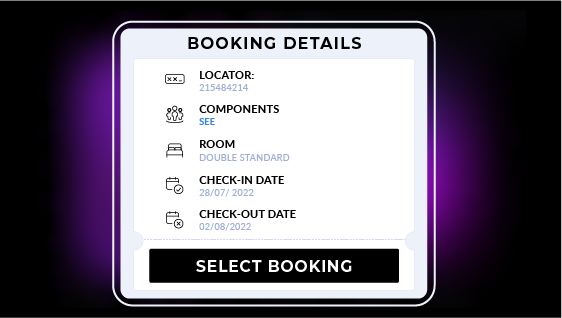
- Historical import from PMS.
- Scalable automation.
In multi-property environments, complexity is not only operational, it is strategic. Without a unified platform, each hotel ends up managing its database in isolation, duplicating efforts, fragmenting information and losing a global view of the chain’s customers.
The same guest may stay at different establishments within the group without there being clear traceability of their history, value or potential. A hotel CRM designed specifically for chains allows this information to be consolidated into a single enriched profile, identifying global behaviour patterns and activating coordinated strategies that maximise guest value.
CAC reduction: the real competitive advantage
In a context where:
- Google Hotel Ads increases its cost.
- OTAs maintain high commissions.
- Paid media is becoming increasingly competitive.
Customer Acquisition Cost (CAC) becomes a critical metric for profitability.
The only strategy that structurally reduces CAC is to increase the percentage of direct bookings from repeat guests.
And that is only possible when:
- The hotel controls the data.
- It segments correctly.
- It activates automated communications.
- It measures the real impact.
A hotel CRM is not a technological expense, it is a direct lever for profitability. It allows you to transform data into direct bookings, reduce dependence on intermediaries and optimise acquisition costs. When guests are activated in a segmented and automated way, each impact is more efficient and measurable.
Instead of investing in paid channels, the hotel begins to monetise its own database.
Proprietary data as a competitive advantage in new hotel marketing
With the gradual disappearance of third-party cookies, the hotel sector is facing a structural change in the way it does marketing. The most strategic asset is no longer on external platforms, but in the hotel’s own ability to collect, structure and activate guest information.
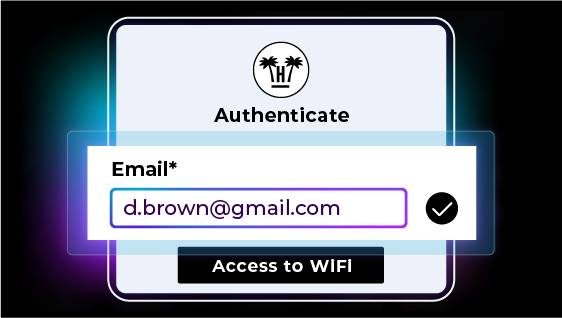
This involves capturing data beyond the main guest, enriching each profile with real stay information, connecting future bookings with their history and automating behaviour-based communications. In this context, hotel CRM becomes the central hub where the PMS, booking engine, WiFi portal, online check-in and satisfaction surveys converge. The integration between these systems is no longer a technological luxury, but a competitive necessity.
We are undoubtedly at a turning point in the sector. The most advanced chains already operate with consolidated CRM architectures, hotel marketing is increasingly oriented towards the intelligent exploitation of proprietary data, and loyalty based on personalisation is surpassing that based exclusively on discounts.
Furthermore, automation allows strategies to be scaled without proportionally increasing the team structure. Hotels that do not build their own data ecosystem now run the risk of maintaining a structural dependence on intermediaries for the next decade.
Conclusion: from anonymous guest to actionable guest
The big change is not technological. It is strategic.
Moving from: “Receiving guests” to “Building scalable direct relationships”.
Hotel CRM represents precisely this paradigm shift: transforming scattered data into a competitive advantage that is sustained over time.
In an increasingly digital, competitive and demanding market, the ability to build loyalty and disintermediate will not depend on the size of the hotel, but on its technological maturity.
And that maturity begins with understanding that data is not a by-product of the stay.
It is the asset that defines the future of the brand.
Centralize all guest information, personalize every message, and automate the entire journey.
Discover how a CRM designed specifically for hotels can help you unlock the full potential of your database and boost direct sales.