How AI adds value to hotels: operations, customer service, loyalty and reputation
Artificial intelligence is no longer a distant promise for the hospitality sector. When applied correctly, it enables the automation of repetitive tasks, the unification of channels, the personalisation of guest relations and the conversion of hotel data into more agile decisions. In this article, we analyse why AI has arrived at just the right time for the hospitality industry, what specific benefits it can bring and how to get started without taking on major risks.
 Tomeu FiolCMO de Hotelinking
Want to see more of Hotelinking’s content on Google?
Talking about artificial intelligence in the hospitality industry is no longer about the future, but about a capability that is beginning to be integrated into the sector’s day-to-day operations. The question is not whether AI will reach hotels, but which hotels will be the first to use it to work more effectively, respond more quickly and build a stronger relationship with their guests.
The good news is that AI does not require starting with massive projects. In most cases, the first step is not to ‘introduce a robot’ or replace staff, but something far more sensible: organising the hotel’s knowledge, centralising information and turning it into a useful foundation for different tools to work according to the same criteria.
This starting point is key because the quality of an AI solution depends, to a large extent, on the quality of the information it uses to learn or respond. The best results in service and operations are achieved when AI is deployed on top of clear processes, reliable data and specific use cases, not as an isolated layer of technology.
Artificial Intelligence in the hotel sector does not replace hospitality: it enhances it
One of the main obstacles in many establishments remains fear. Fear of losing the human touch, of the tool failing, or of adopting a technology that the market still perceives as ‘immature’. However, the trend in the sector is moving in exactly the opposite direction: using automation to free up operational time and devote more human attention to the moments that truly matter.
The multinational technology firm Oracle sums up this evolution with a very useful idea for the hospitality industry: today’s hotels tend to be more automated, smarter and, precisely for that reason, more personal.
This fits very well with the reality of the hotel industry. Reception, bookings, telephone support, messaging, incidents, special requests, upselling, post-stay follow-ups and reputation management generate a huge volume of micro-interactions. Many are repetitive.
The same is true in other sectors with a high volume of customer service. Klarna (a global digital banking and flexible payments company), for example, reported that its AI assistant managed two-thirds of its customer service chats in its first month, with shorter resolution times than before and satisfaction levels comparable to human service in many cases. It’s not the hospitality industry, but it does demonstrate something very significant: when AI is applied to frequently asked questions, request categorisation and 24/7 support, the operational benefit is tangible.
The big shift: moving from a fragmented ecosystem to a connected operation
In many hotels, the problem is not a lack of technology, but fragmentation. One tool for marketing, another for reception, another for messaging, another for reputation management, and another for calls. The result is usually the same: duplication of work, inconsistent responses and scattered data. In many cases, there is a lack of standardised criteria.
This is where AI adds the most value when supported by a well-constructed knowledge base. If the hotel or chain correctly documents elements such as:
- the establishment’s policies and regulations,
- opening hours,
- room types,
- services,
- sales scripts,
- operating procedures,
- frequently asked questions,
- promotions,
- local information,
- and brand guidelines,
That same foundation can power multiple touchpoints, such as a web assistant, a messaging channel, an automated telephone service or a sales recommendation system.
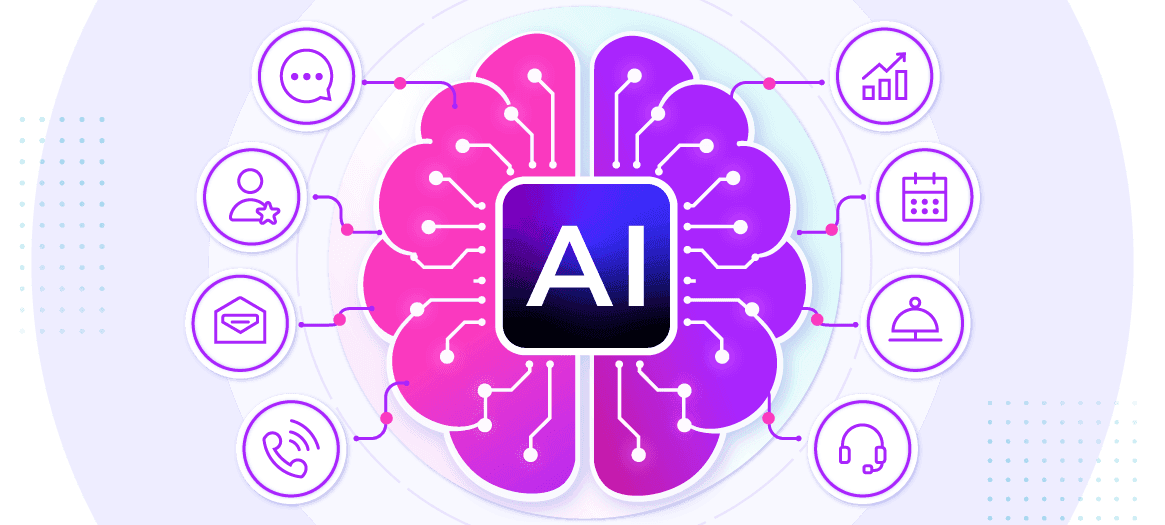
Artificial Intelligence in customer care works best when integrated at various points in the customer journey, rather than as an isolated experiment.
Applied to the hotel sector, this means that the same ‘knowledge’ can be used to:
- answer pre-booking queries via the website;
- handling enquiries before or during the stay via messaging or WhatsApp;
- handling frequently asked questions in multiple languages;
- assist staff with suggested responses;
- identify recurring issues and turn them into operational improvements.
This approach reduces friction, unifies the brand message and prevents each channel from ‘inventing’ its own version of the information.
Resource optimisation: less repetitive work, more time to add value
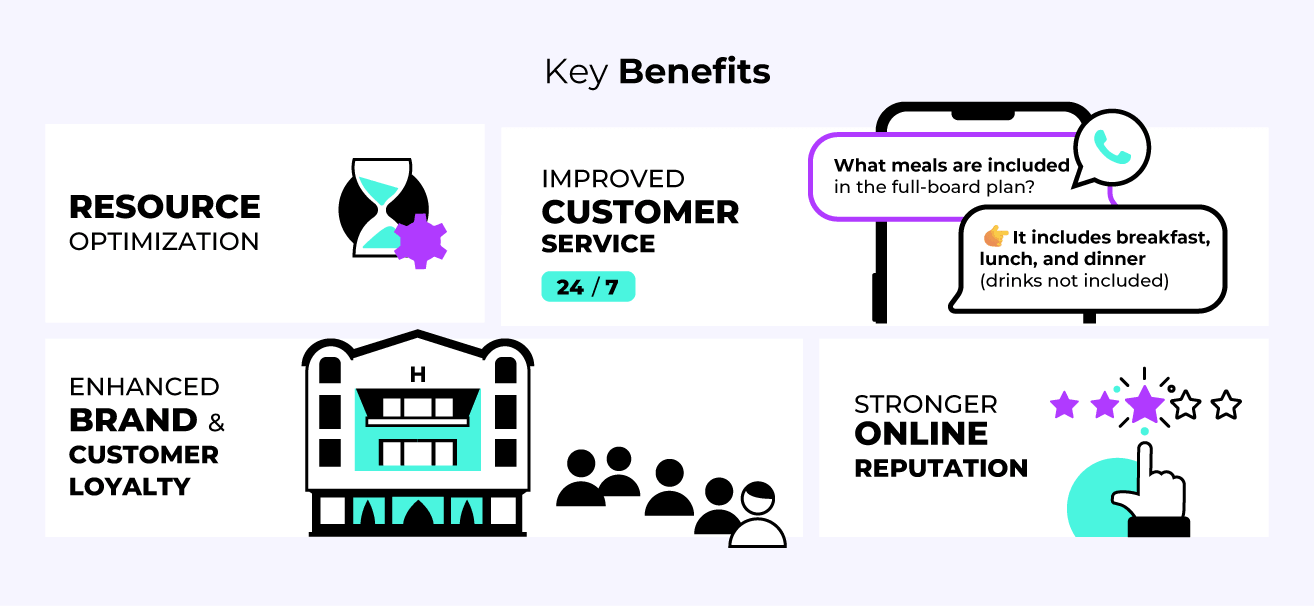
Resource optimisation is probably the most immediate benefit. In a hotel, a significant portion of the team’s time is spent repeatedly answering the same questions: opening hours, parking, late check-out, breakfast, pet policy, location, transfers, amenities, service availability or queries about bookings.
McKinsey & Company, an international consultancy specialising in strategy and business transformation, estimates that, in the context of customer care and quality control, generative AI can deliver improvements of 25% to 30% in agent efficiency, savings of over 50% in certain QA processes, and improvements of 5% to 10% in satisfaction, provided the implementation is well designed. Although these figures relate to customer service operations in the broadest sense and not exclusively to hotels, they are highly applicable to booking departments, extended reception services or hotel contact centres.
Furthermore, AI does not merely respond: it also classifies, summarises, prioritises and escalates. When a hotel or chain receives a high volume of repetitive enquiries, automating the first tier of support frees up human resources for more sensitive or complex cases.
Better customer service: speed, consistency and real availability
Today’s guest expects immediacy. They want their queries resolved before booking, during their stay and after they’ve left, without always having to rely on office hours.
For a hotel, this means that AI should not be viewed as a “replacement for the receptionist”, but rather as a permanent service layer that can handle the simple tasks and escalate the important ones. A well-trained assistant can respond 24/7 in multiple languages, maintain brand tone consistency and offer a more seamless experience across the website, WhatsApp or voice channels.
Consultancy firm Deloitte also notes that a significant proportion of industry executives already see generative AI as a way to improve personalised support and automate communication with guests.
Better brand image and greater loyalty
A hotel brand is no longer built solely on design, location or category. It is also built on the quality of every interaction. A quick, helpful and consistent response conveys professionalism. A slow, contradictory or incomplete response erodes trust.
That is why Artificial Intelligence, when applied effectively, can enhance brand image: not simply by appearing innovative, but by making the experience more seamless. In the automotive sector, Volvo Cars launched a programme to unify the customer’s voice across different channels and better understand the full consumer experience. The lesson for the hospitality industry is clear: the more connected the customer listening is, the easier it is to address friction points and strengthen brand perception.
And that’s where loyalty comes in. A guest who receives relevant, personalised and timely responses is more likely to return, purchase additional services and rate their stay more highly.
AI and online reputation: improvement doesn’t start with the review, it starts before
Many hotels only think about reputation once a review has been published. But real reputation is built long before that: through clear communication, prompt responses, incident management and the ability to spot patterns.
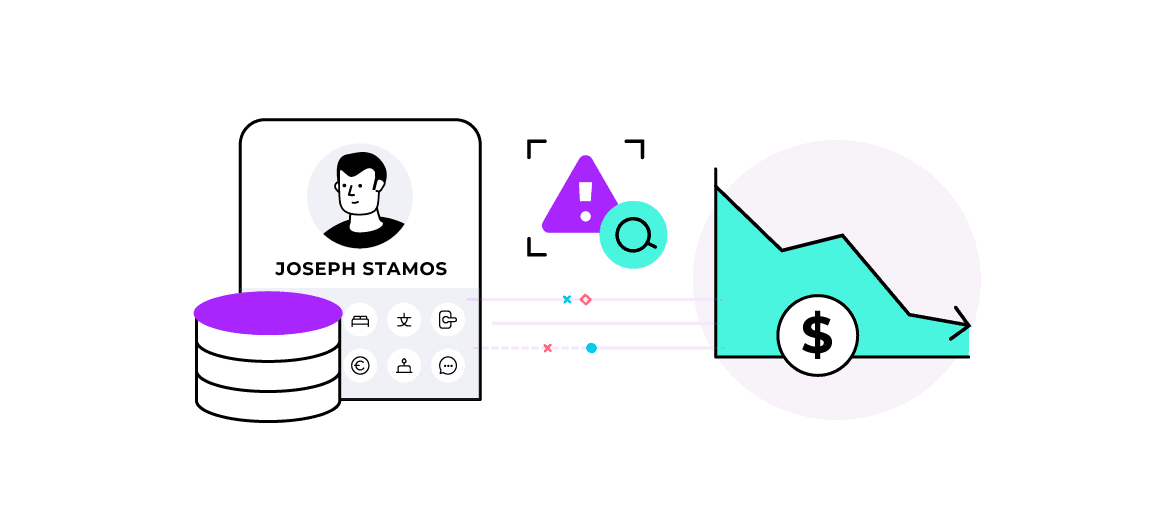
AI can help analyse large volumes of feedback, group recurring themes, identify sentiments and prioritise actions. Analysing comments, surveys and interactions in a structured way allows you to detect where the experience breaks down and act before the problem escalates on public platforms or affects guest loyalty.
This has a direct impact on reputation rankings. Not because AI ‘boosts the score’ on its own, but because it helps close the loop between listening, understanding and correcting more quickly.
How to get started without taking on major risks
The best way to introduce AI into a hotel is not to promise a total transformation from day one. It is to start with high-volume, low-risk processes:
- frequently asked questions on the website;
- messaging support during the stay;
- telephone support for recurring enquiries;
- a website chatbot with suggested responses;
- analysis of comments and feedback.
The prerequisite is simple to explain, though it requires discipline: building a solid knowledge base for the hotel or chain. The more useful, up-to-date and structured information there is, the better the responses will be and the more tools will be able to make use of it. That initial effort yields a significant return, because it supports not just one solution, but many.
Conclusion
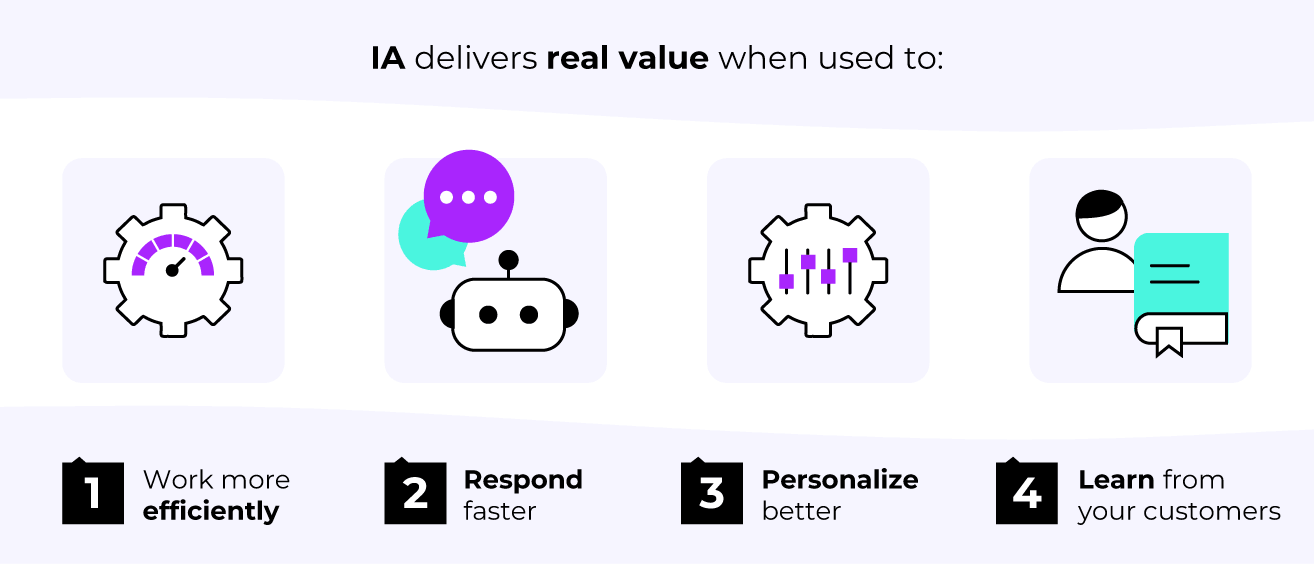
AI applied to the hospitality sector should not be seen as a fad or a threat, but as a new layer of operational and relational capability. Its value lies not in ‘doing futuristic things’, but in better managing day-to-day operations: responding sooner, coordinating better, personalising more and learning faster from the guest.
For hoteliers who are still hesitant, the most sensible message is perhaps this: there is no need to go all in at once, but it is essential to start building the knowledge and structure that will make this evolution possible. Today, there is little to lose in a well-planned pilot and much to gain in terms of efficiency, service, reputation and customer loyalty.
Companies that organise their data, unify their channels and test specific use cases first will be better prepared to meet an increasingly demanding market.
How we are putting AI into practice at Hotelinking
At Hotelinking, we see artificial intelligence as a way to help hotels operate more effectively, not as a standalone technology. That is why we are already integrating AI capabilities into various solutions all aimed at the same goal: unifying the customer relationship, improving operational efficiency, and providing more agile, consistent and useful responses throughout the guest’s entire journey.
This approach translates into tools capable of supporting communication, customer service, contact management and query resolution across various channels, always with a logic aligned with the hotel’s actual operations. Because beyond automating tasks, the true value lies in ensuring that technology helps deliver a smoother experience for the guest and a more manageable one for the team.
If you’d like to find out how we’re applying this vision to solutions already tailored for the hospitality sector, you can book a demo with our team.