GPON in hotels: how to anticipate outages before they affect the guest
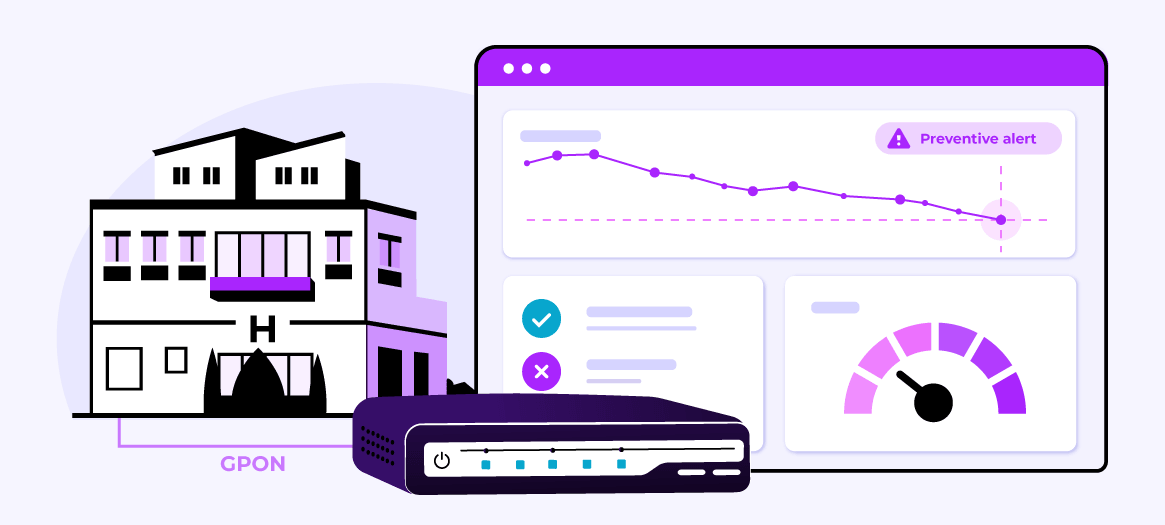
In a hotel GPON network, many connectivity incidents do not appear suddenly. Before an outage occurs, the optical signal often shows signs of degradation that can be detected and analysed in time. WiFiBot enables continuous monitoring of optical quality, review of the evolution between OLT and ONT, and anticipation of interventions before the problem affects the guest or hotel operations.

Want to see more of Hotelinking’s content on Google?
In a hotel network, a connectivity outage is rarely just a technical problem. It can affect the guest experience, reception operations, internal systems, points of sale, IP telephony, the hotel’s digital services and any operation that depends on the network infrastructure.
That is why, in a hotel, connectivity should not only be managed when something stops working.
The key question is not only whether the network is active. The question is whether the network is beginning to show signs of deterioration before the problem becomes visible to the end user.
In GPON infrastructures, one of those signs lies in optical quality.
Optical power, the evolution of the signal between OLT and ONT, defined thresholds and the history of each port can reveal far more than a one-off check. They can indicate whether an installation remains stable, whether a fibre is beginning to degrade, whether an ONT is operating close to its limits or whether there is a growing risk of an incident.
That is where continuous monitoring of the optical signal stops being a secondary technical task and becomes a key tool for operating the hotel network more effectively.
The optical signal should not be checked only when something fails
In many network operations, optical quality is checked only once an incident already exists.
- A guest complains.
- A room loses service.
- A device stops responding.
- A technician accesses the OLT.
- The optical power is checked…
- …and only then is it confirmed that there was a problem.
That approach allows teams to resolve issues, but not to anticipate them.
The problem is that many optical degradations do not appear all at once. They can evolve over hours, days or weeks. A fibre that has been poorly handled, a dirty connector, excessive bending, a splitter with high loss, an ageing installation or an ONT operating close to its limit can all cause a progressive loss of quality before triggering a real outage.
If the signal is only checked when something fails, the most valuable part of the information is lost: its evolution.
And in network operations, evolution is what makes it possible to act earlier.
GPON in hotels: a critical and increasingly demanding infrastructure
GPON networks play an increasingly important role in hotel environments because they make it possible to deliver connectivity services efficiently to rooms, common areas, annex buildings or large-scale facilities.
But precisely for that reason, any degradation can have a significant impact.
An ONT can serve a room, a set of services or a specific area of the hotel. If its optical signal deteriorates, the problem can result in loss of connectivity, intermittent interruptions, poor performance, hard-to-diagnose errors or incidents that appear and disappear without an obvious cause.
In addition, in a hotel, the network is not used uniformly throughout the day.
There are occupancy peaks, higher-consumption time slots, events, groups, shift changes, intensive use of digital services and moments when any failure is felt more strongly.
That is why it is not enough to know whether an ONT is online. It is necessary to understand the conditions in which it is operating.
From a one-off reading to continuous visibility
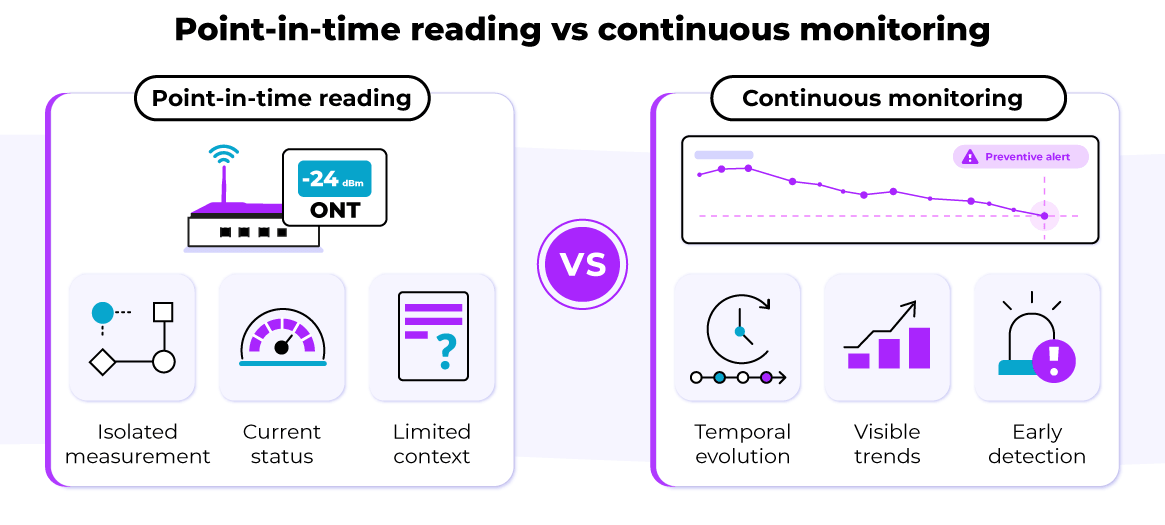
A one-off optical power reading can show whether, at that moment, the signal is within an acceptable range.
But a one-off reading does not answer fundamental questions:
- Is the signal stable or is it degrading?
- Has it worsened compared with last week?
- Is that ONT always operating close to the threshold?
- Does the problem affect a specific port or several associated ONTs?
- Is the loss isolated or part of a trend?
- Are there relevant differences between what is observed on the OLT and what the ONT reports?
To answer these questions, historical data, time-based evolution and comparison are needed.
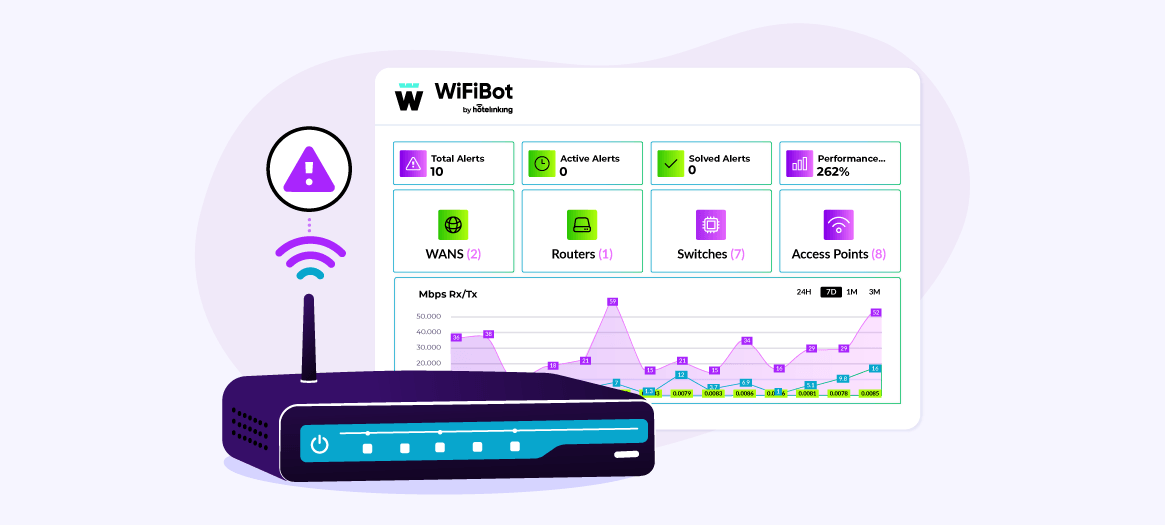
WiFiBot makes it possible to monitor optical levels by port, analyse their evolution and compare information between OLT and ONT. This helps distinguish a stable situation from progressive degradation and detect problems before they become unplanned outages.
The difference matters.
It is not just about seeing a value. It is about understanding its behaviour.
Thresholds help, but history explains the problem
Thresholds are necessary to define when a signal enters a risk zone.
But in a real network, the absolute value does not always tell the whole story.
An ONT that remains close to the limit may require monitoring even if it has not yet generated a critical alert. A signal that slowly worsens may be more relevant than a small one-off variation. A port with several ONTs showing a similar trend may indicate a shared problem. And degradation that repeats under certain conditions may point to a physical or installation-related cause.
That is why history is so important.
Historical data shows whether the signal is worsening, since when, at what pace and with what potential impact. It also makes it possible to justify an intervention with data, prioritise what to check first and avoid unnecessary site visits.
Without history, each reading is a snapshot.
With history, the network starts to tell a story.
Anticipating an incident changes the way teams work
When optical degradation is detected in time, the technical team can act with more room to manoeuvre.
- They can plan a review at a lower-impact time.
- They can check connectors, patch cords, splitters or routes before the service goes down.
- They can identify which rooms, areas or devices are at risk.
- They can coordinate the intervention with the hotel.
- They can prevent the first sign of the problem from being a call from reception or a guest complaint.
That is the difference between reactive operation and proactive operation.
In reactive operation, the technical team waits for the incident to manifest itself.
In proactive operation, the team works with early signals, trends and historical data to reduce the number of incidents that reach the end user.
In hospitality, that difference is highly valuable because the perception of service is formed before the guest understands the technical cause of the problem.
For the guest, the network either works or it does not.
For the technical team, the key is to detect earlier when it may stop working.
Comparing OLT and ONT provides more context
Optical monitoring becomes more valuable when it is not limited to a single point of view.
The OLT provides a centralised view of the network. The ONT provides information from the final end of the connection. Comparing both references helps teams better understand where the problem may be and whether the degradation affects a specific device, a physical segment, a port or a set of devices.
This comparison helps avoid incomplete diagnoses.
An isolated anomalous reading on one ONT is not the same as several ONTs associated with the same port showing a similar trend. A one-off out-of-range value is not the same as progressive degradation seen from both ends. A device issue is not the same as a physical incident in the infrastructure.
The more context the technical team has, the more precise the intervention can be.
And the more precise the intervention, the less time is lost on manual checks, unnecessary site visits or changes that do not resolve the real cause.
Fewer unplanned outages, more planning
One of the main benefits of continuously monitoring optical quality is reducing unplanned outages.
Not every problem can be avoided, but many can be detected earlier.
When the network shows progressive degradation, the team can turn a future urgent incident into a planned intervention. That completely changes operations.
A planned intervention makes it possible to choose the right moment, notify the relevant people if necessary, prepare the material, coordinate the right team and minimise the impact on the service.
An urgent incident, on the other hand, usually arrives with pressure, limited initial information and greater impact on the hotel.
Continuous optical monitoring does not eliminate the need to intervene. What it does is improve the timing, priority and quality of that intervention.
Objective data for conversations with providers and technical teams
Optical quality is also important because it helps support technical conversations with evidence.
When an incident affects the fibre, a physical segment, a specific installation or a provider, it is not enough to say that “the network is not working well”. Data is needed: the evolution of optical power, the moment when degradation began, affected devices, comparison between OLT and ONT, change history and previous behaviour.
This makes communication easier between internal teams, maintenance companies, installers and external providers.
Instead of working from perceptions, teams work from measurable data.
And that reduces debate, speeds up diagnosis and enables better-founded decisions.
WiFiBot and optical quality as part of daily operations
WiFiBot incorporates optical signal monitoring as a natural part of network operations.
It is not an isolated check or a task reserved for situations where a fault already exists. It is about integrating optical quality into a broader view of the infrastructure: devices, services, clients, histories, alerts, configurations and network evolution.
This allows the technical team to review the current status, analyse trends, identify degradation and prioritise interventions from a single platform.
Optical quality stops being a technical data point hidden in a one-off query and becomes part of the operational context of the network.
And when that data is combined with history, thresholds and comparison between OLT and ONT, it becomes a very powerful tool for anticipating problems.
Conclusion: fibre also gives warning signs before it fails
In a hotel network, many outages do not appear suddenly.
Before a room loses connectivity, before reception receives a complaint or before a device stops responding, the infrastructure may already be showing signs of deterioration.
Optical power is one of those signs.
Monitoring it continuously makes it possible to detect progressive degradation, understand trends, compare information between OLT and ONT, plan interventions and reduce unplanned outages.
The challenge is not only to repair the fibre when it fails.
The challenge is to see earlier when it starts to fail.
And that is a key difference between a network that is checked when there are problems and a network that is operated with real technical judgement.