Hotel marketing trends for 2026: proprietary data, automation and independence from OTAs
Hotel marketing in 2026 will be driven by first-party data, automation, and direct sales. This article explains how connecting tools like captive WiFi, the PMS, the CRM, and the booking engine turns each stay into future direct bookings.

Hotel marketing will continue to evolve rapidly in 2026 and will mark a turning point for many hotels. The combination of increased pressure on margins, the rising cost of payment channels and an increasingly digital traveller is forcing a rethink of traditional strategies.
In this new context, hotel marketing trends for 2026 clearly point towards the activation of proprietary data, intelligent automation and the strengthening of the direct channel as the central pillars of growth.
Guest data (and their companions) as the cornerstone of hotel marketing
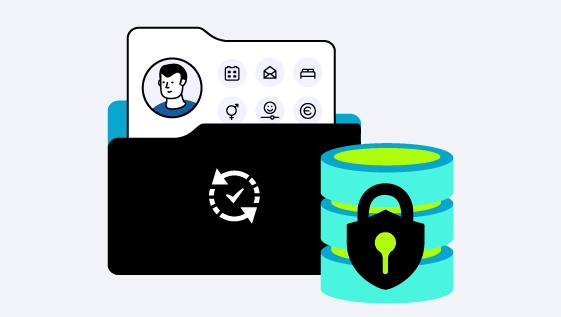
One of the main hotel marketing trends for 2026 is the definitive consolidation of first-party data as a strategic asset. The gradual disappearance of third-party cookies and limitations on access to intermediary data mean that hotels need to generate and control their own guest data.
It is no longer just a matter of collecting emails, but of building complete, verified and enriched profiles that allow for a better understanding of the traveller, segmenting audiences and personalising communications. Hotels that do not invest in their own data collection systems will find their ability to compete in the digital environment increasingly limited.
Tools capable of capturing information not only from the main guest on the booking, but also from all accompanying guests who are part of the stay, will become particularly important.
In most hotels, a large proportion of travellers remain invisible from a marketing perspective, despite having enjoyed the full experience. Having solutions that allow the identification, verification and enrichment of data on all guests will be key to expanding the hotel’s own database, improving segmentation and multiplying opportunities for loyalty and direct sales.
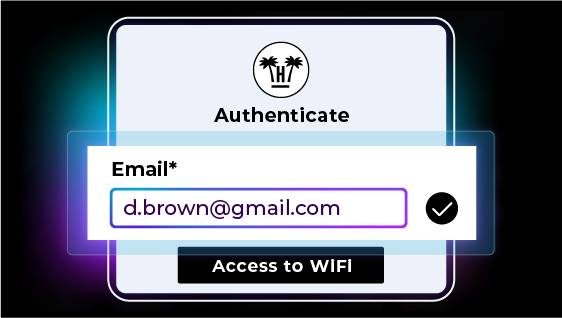
Technologies such as captive WiFi portals, online check-in and automated communications allow these profiles to be captured naturally and in accordance with the GDPR, turning each stay into a real source of information gathering.
In this way, the hotel no longer depends exclusively on the person who made the reservation and instead builds direct relationships with its entire actual audience, increasing the long-term value of each stay.
Marketing automation based on the guest lifecycle

Hotel marketing will become less manual and more automated. Isolated campaigns will give way to automatic communication flows triggered by real guest events: before the stay, during the stay, after check-out and in loyalty phases.
This automation not only improves operational efficiency, but also allows for more relevant messages to be delivered at the right time.
The trend for 2026 clearly points towards systems capable of orchestrating consistent communications throughout the customer lifecycle, from the moment before arrival to long after check-out.
Instead of one-off actions—isolated campaigns, mass mailings, or promotions without continuity—hotels are moving towards automated marketing models that connect each interaction to the next, building a progressive and consistent relationship with the guest.
This orchestration allows the message, channel and timing to be adapted to the actual context of each traveller, increasing the relevance of communications and reducing saturation. The result is more efficient marketing, where each impact has a clear purpose within an overall strategy, return on investment is optimised and long-term guest value is maximised, rather than constantly relying on new acquisition actions.
Artificial intelligence applied to hotel marketing
Artificial intelligence will cease to be an experimental element and become a practical, everyday tool in hotel marketing. Its use will extend to content optimisation, message personalisation, behaviour prediction and conversion rate improvement.
However, artificial intelligence will only be truly effective when fed with high-quality, verified and up-to-date data. Without a solid data base, AI is limited to automating processes with no real impact, generating generic messages and decisions that are not in line with the guest’s reality.
For this reason, its adoption must necessarily go hand in hand with a clear direct marketing strategy aimed at capturing, enriching and activating data throughout the customer’s life cycle. No matter how advanced it may be, technology does not generate results on its own: only when integrated with the hotel’s commercial objectives — direct sales, loyalty, repeat business and profitability — does artificial intelligence become a true driver of growth and efficiency.
Direct sales as a cross-cutting strategy, not an isolated channel
Another key trend for 2026 is to understand direct sales as a global strategy, and not just as another channel in the distribution mix. Hotel marketing will work in an increasingly coordinated manner with operations, systems and revenue management to reduce dependence on OTAs.
Every point of contact with the guest—WiFi, online check-in, surveys, automated communications—becomes an opportunity to strengthen the direct relationship with the brand, improve the experience and encourage repeat bookings without intermediaries.
In this context, loyalty programmes will play a strategic role in direct sales in 2026, provided that hotels are able to maximise subscriber acquisition automatically and non-intrusively.
Tools such as the captive WiFi portal make it possible to turn an operational moment—the Internet connection—into a real opportunity to identify the guest, request their consent, and link them to the hotel’s loyalty programme, even when the booking has been made through an OTA.
This ability to integrate subscriber acquisition into the guest experience eliminates friction, significantly increases loyalty programme sign-ups and strengthens the direct relationship with the brand.
In this way, direct sales no longer depend solely on the booking engine and are now supported by a loyal, activatable and recurring customer base, reducing dependence on intermediaries in the medium and long term.
True personalisation of the guest experience
Personalisation will be a basic requirement in 2026. Travellers expect relevant communications, tailored to their language, profile and type of trip. Hotel marketing is evolving towards one-to-one personalisation, based on real behaviour rather than generic segmentation.
This trend has a direct impact on guest satisfaction, online reputation and the likelihood of repeat business. Personalisation is no longer an added value, but a differentiating factor compared to the competition.
More efficient and profitability-oriented marketing
Finally, hotel marketing in 2026 will be marked by a more efficient and sustainable approach. Faced with rising advertising costs, hotels will seek to maximise the long-term value of each guest, focusing on loyalty and repeat business rather than relying exclusively on constantly attracting new customers.
Better measurement, process automation and reduced dependence on investment in paid channels will be key to maintaining profitability.
From theory to practice: how tools should be connected to transform a stay into a new booking
For these trends to translate into real results, in 2026 it will not be enough to implement tools in isolation. The real value will lie in the synergy between solutions and how data flows between them throughout the guest lifecycle.
A well-connected hotel marketing ecosystem allows each interaction to add value to the next.
How data travels to generate a new direct booking:
| Tool | What it contributes to the ecosystem | How it contributes to the next booking |
|---|---|---|
| Captive WiFi portal | Collection of verified data from guests staying at the hotel and non-guests, including companions, with GDPR consent and real-time email verification. | Initiates a direct relationship with the guest and feeds the hotel’s own database. Must integrate automatically with the PMS database. |
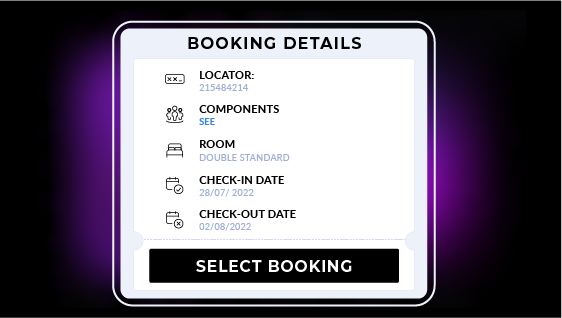
| Online check-in | Advance guest identification and capture of personal and documentary data. | Allows personalisation of the experience and preparation of pre-stay communications. Must integrate automatically with the PMS database. |
| Hotel PMS | Key operational data: reservation, dates, channel, room, occupancy, and stay history. | Acts as a central hub that validates, completes, and contextualises the captured data. |
| PMS ↔ CRM integration | Unification of operational and marketing data into a single guest profile. | Converts isolated data into complete, actionable profiles. |
| During the stay (WiFi, surveys, interactions) | Capture of guest behaviour, preferences, and language. | Enriches the profile and improves future segmentation. |
| Online check-out | Closes the stay with complete data and a frictionless experience. | Triggers post-stay actions immediately. |
| Hotel CRM | Centralisation and management of the guest lifecycle. | Orchestrates automated and personalised campaigns. |
| Conversational channels (WhatsApp CRM) | Direct, contextual, one-to-one communication. | Increases engagement and response rates. |
| Automated communications and loyalty | Guest activation at the right moment. |
When these tools work in an integrated manner, data ceases to be static and becomes a dynamic asset, capable of accompanying the guest from their first interaction to their next direct booking.
It is this connected vision—and not the sum of isolated solutions—that will enable hotels to compete with greater independence and profitability in 2026.