
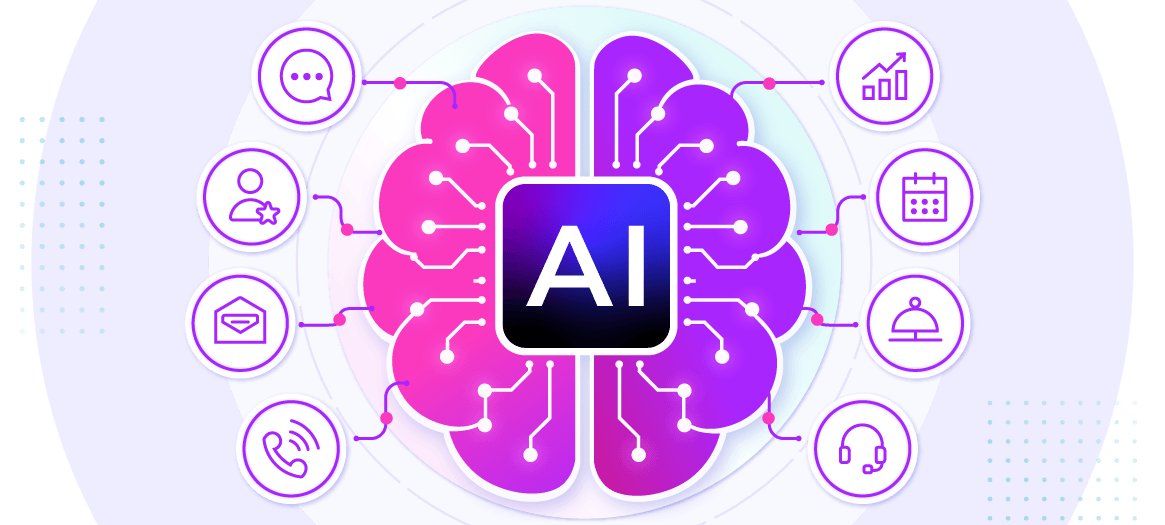
New guide: AI applied to hotels, with use cases, common mistakes to avoid and first steps
Hotelinking presents a practical guide to help hotels and hotel chains understand where artificial intelligence can deliver real value, which mistakes should be avoided and how to get started with specific use cases without losing the human touch.

Artificial intelligence has become one of the most talked-about topics in the hospitality industry. There is growing discussion around automation, virtual assistants and/or agents, guest service, personalisation, operational efficiency and new ways of connecting data, channels and processes.
But amid all this interest, one question is becoming increasingly common: where should hotels start without making their operations more complex?
At Hotelinking, we have prepared a new practical guide on AI applied to hotels with the aim of helping hotels and hotel chains better understand what this technology can really contribute, what conditions should be in place before implementing it and which mistakes are worth avoiding.
This is not a guide designed to present artificial intelligence as a magic solution, but rather as a tool that can deliver value when applied with judgement, to clear processes, reliable information and specific needs.
Why we created this guide
In many recent conversations we have had with hoteliers, the same feeling keeps coming up: there is interest in AI, but also caution and a certain degree of hesitation.
And that caution makes sense. Hospitality is an industry where technology must coexist with daily operations, with teams that already manage multiple tools and with a guest experience where human interaction remains essential.
That is why, before implementing new solutions, it is worth asking a few important questions:
- What problem do we want to solve?
- Which processes are ready to be automated?
- What information does AI need in order to respond properly?
- Which tasks should remain in the hands of the human team?
- How can we measure whether a solution is actually delivering value?
- When does it make sense to scale to new channels or use cases?
This guide was created precisely to help organise those questions.
What you will find in this white paper
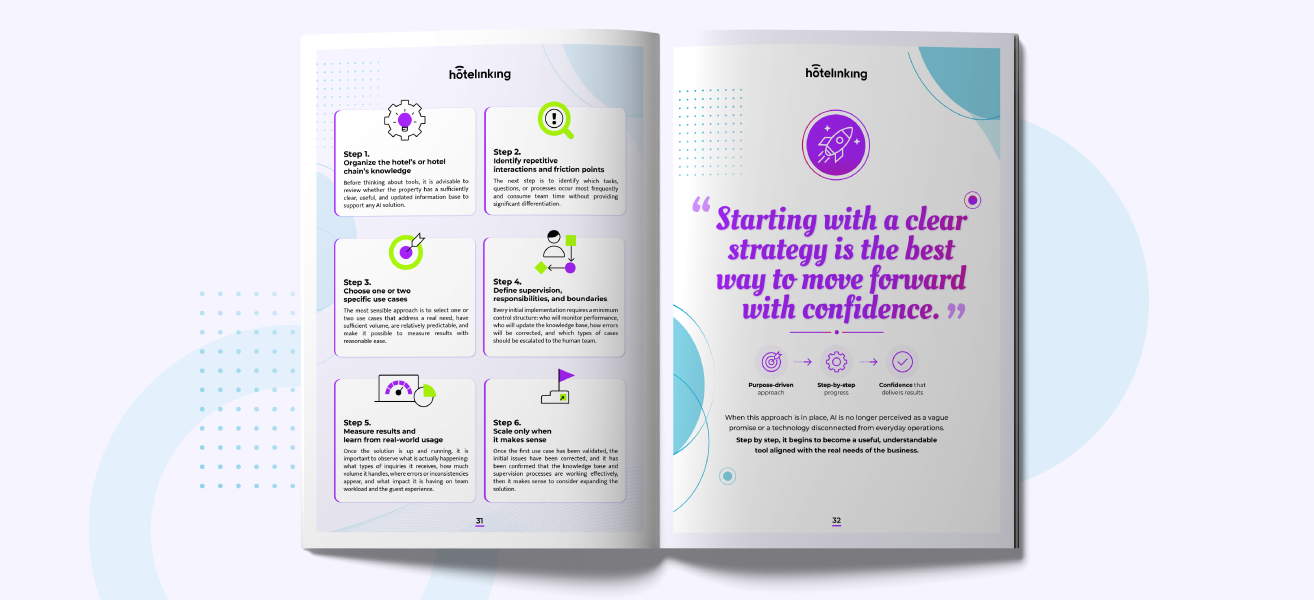
The document approaches artificial intelligence from a practical and realistic perspective, focused on the day-to-day reality of hotels and hotel chains.
Among other topics, the guide explains:
- the current state of AI in the hospitality industry;
- why many hotels have not yet taken the step;
- what AI can really contribute to daily operations;
- why the hotel’s knowledge base is key;
- which mistakes should be avoided before implementing solutions;
- how to move from isolated tools to a more connected approach;
- how to apply AI without losing the human touch;
- which use cases may be suitable for getting started with less risk;
- which roadmap to follow in order to move forward step by step.
The goal is not to automate for the sake of automation, but to understand where AI can help hotels respond better, reduce repetitive workload, connect information more effectively and free up time for what truly defines a great hospitality experience.
A guide to move forward with judgement
One of the central messages of the white paper is that the value of AI does not depend on technology alone. It also depends on the quality of the information, the clarity of the processes and the hotel’s ability to integrate that technology into a real operational framework.
Implementing AI without a reliable knowledge base, without human supervision or without clear objectives can create more friction than value. On the other hand, starting with specific, measurable and easy-to-supervise use cases allows hotels to build confidence, learn from real usage and move forward more safely.
That is why this guide can be useful for management, marketing, operations, guest experience, IT teams or any hotel team considering how to apply artificial intelligence without losing control, consistency or the human touch.
With this guide, we want to offer a simple, practical and honest view of a technology that is already changing the conversation in the industry, but that will only generate real value if it is applied with judgement.
Download the free guide
You can download the full guide from our landing page