What Is a Hotel CDP, and Why Your CRM Needs One
Hotels collect bookings across multiple PMS platforms and channels, but rarely manage to unify them into a single guest profile. Here’s what a hotel CDP is, why it’s the missing piece next to your CRM, and what’s changing in the industry.

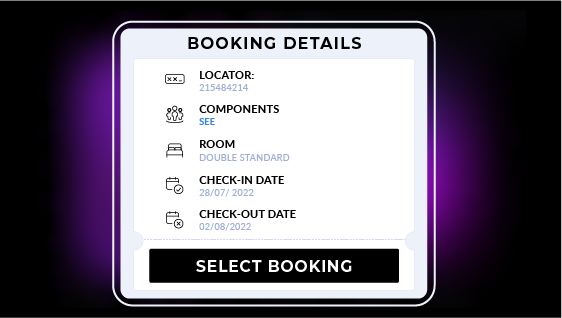
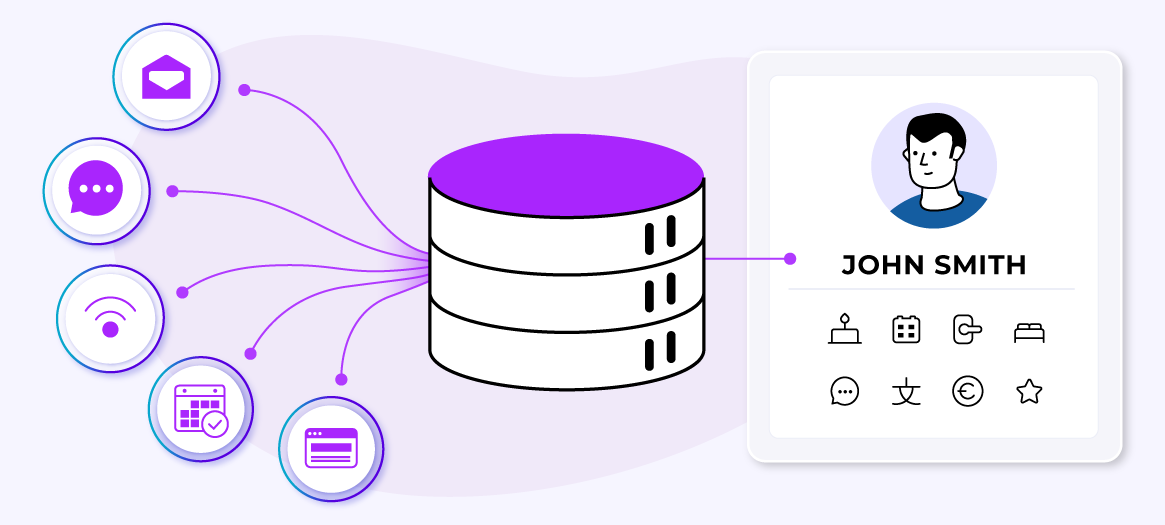
A guest who has booked the same hotel three times — once through the website, once through Booking.com, once through a travel agency — can end up showing up in the system as three different customers. This fragmented-identity problem is exactly what a hotel CDP (Customer Data Platform) is built to solve: a technology that unifies bookings and guest data across PMS systems, channels and properties.
The PMS logs the booking, but it doesn’t always recognise that it’s the same person. And if that hotel group has several properties, the problem multiplies: each one can hold its own history, with no connection between them.
This is not a minor issue. It’s actually one of the reasons many loyalty and direct-marketing strategies never quite take off: the problem isn’t a lack of data — it’s that the data is scattered.
What is a CDP, and how is it different from a CRM?
A CDP (Customer Data Platform) is a technology layer specialised in unifying customer identity from every interaction and booking, regardless of which PMS, channel or property in the group they came from. Its job isn’t to manage the commercial relationship with the guest — that’s still the CRM’s role — but to make sure that, before the data ever reaches the CRM, the hotel knows for certain it’s the same guest and has the most complete information possible about them.
Put another way:
The CRM is where the relationship with the guest is activated; the CDP is what makes sure that relationship is built on accurate, complete and unified data.
A traditional CRM depends on whatever is entered manually or through occasional integrations. If the same guest books through two different channels with slightly different details, the CRM will often treat them as two separate profiles. A CDP built for hospitality solves exactly this: it cross-references bookings from different PMS systems and channels, spots matches even when the data isn’t identical, and builds a single guest profile with the full history attached.
Hotel CDP vs. CRM vs. PMS: who does what?
| PMS | CDP | CRM | |
|---|---|---|---|
| Main function | Manages day-to-day operations and bookings for one property | Unifies guest identity and data across properties and channels | Manages the commercial relationship and campaigns with the guest |
| Scope | Single property | Whole group / chain | Whole group / chain |
| Recognises repeat guests across channels? | Not natively | Yes — this is its core function | Depends on the quality of the data it receives |
| End result | A record of the stay | A single guest with a complete history | Campaigns, segmentation and communication |
Why this matters now in hospitality
Reliance on external channels is still high: according to Cloudbeds’ 2026 State of Independent Hotels report, over 63% of independent hotel bookings in 2025 came through OTAs (in some cases as much as 80%), and these bookings carry a notably higher average cancellation rate of 21.8% compared with direct channels. Every booking that passes through an external channel tends to bring less guest data with it, and makes that guest harder to recognise if they book again.
At the same time, industry analysis is starting to show the financial impact of fixing this: various market studies on hotel data platforms point to an average 18% improvement in revenue per available room (RevPAR) and close to a 24% reduction in customer acquisition cost for hotels already working with unified data. The underlying takeaway is the same: the more fragmented the data, the more expensive it becomes to recognise and win back a guest who has already chosen you once.
On top of that, the industry itself is starting to draw a line between generic data platforms and those built specifically for hospitality — precisely because guest data (stay history, preferences, booking channel, on-site website behaviour) doesn’t look like typical ecommerce data and needs integrations of its own.
How a CDP feeds the hotel CRM
A CDP’s value isn’t in replacing the CRM — it’s in feeding it better raw material. In practice, that means:
- Bookings unified by guest, regardless of PMS or originating channel.
- Verified contact data, prioritising the most recent and complete information available.
- Full stay history, useful for both loyalty and segmentation.
- No duplicates: if the guest already exists in the CRM, their record is enriched — not recreated from scratch.
- Website browsing behaviour, to understand guest interests even before they identify themselves through a booking.
That last point deserves its own mention: it’s increasingly common to track the behaviour of anonymous visitors on a hotel or group’s website — which pages they visit, what they search for, what interests they show — and connect that to the moment that visitor becomes an identified guest. It’s a layer of data that, once properly connected to the CRM, enables campaigns built around real interests instead of generic segments.
Bottom line: if your hotel is already capturing data, the logical next step is making sure that data truly represents a single guest, with their full value and history attached, before turning it into campaigns, journeys or personalised experiences.
How Hotelinking solves this today
At Hotelinking, we’ve built this CDP layer inside GuestMaker specifically for the hospitality industry — not as a generic data platform later adapted for hotels. It’s already live, and several clients are using it in production to unify their bookings and build a single guest profile with the full history attached, regardless of which PMS, channel or property each booking came from.
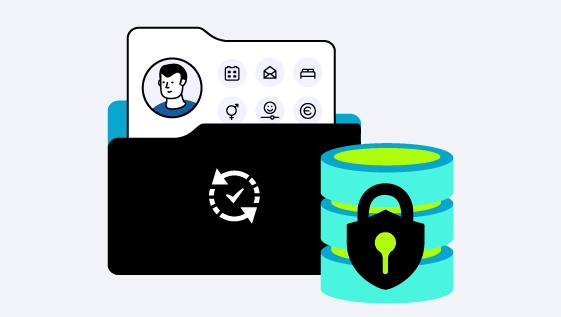
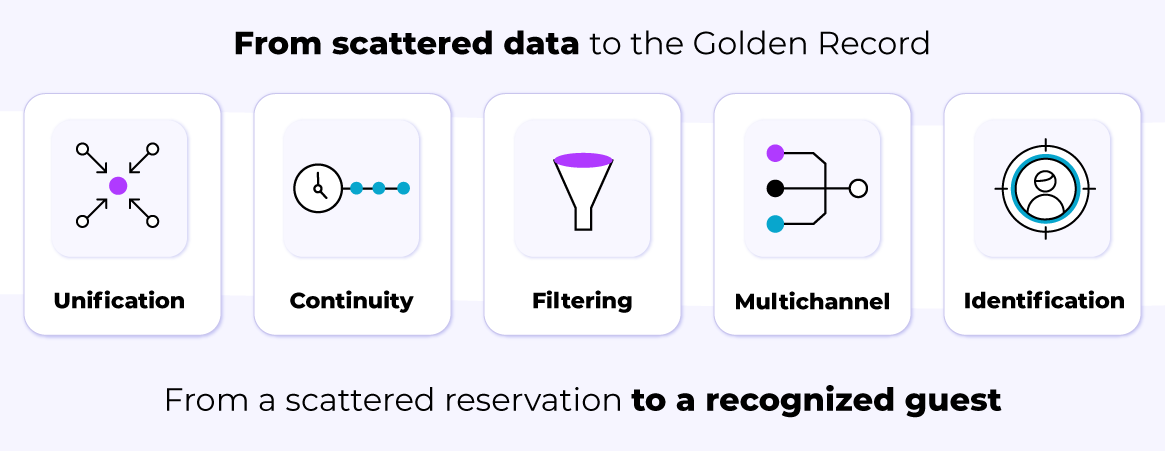
From scattered data to the Golden Record. To work out whether two bookings belong to the same guest, the tool cross-references and validates the available information, combining different levels of precision — from exact matches through to AI models for less obvious cases. The result is the Golden Record: the guest’s final profile, with validated data and their complete stay history across the hotel or the whole group, all gathered into a single record.
It doesn’t start from zero — historical bookings count too. Much of a CDP’s initial value doesn’t come from bookings made from today onward, but from the history a hotel or group already has sitting in its PMS, sometimes going back years. The tool can import and unify that historical data too, running it through the same validation process, so that from day one the hotel already has a base of identified guests and Golden Records built from real past bookings — not only from what gets generated going forward.
Only what adds value reaches the CRM. Bookings don’t enter the CDP until the guest has checked out, so the system always works with completed stays. If the Golden Record already includes a contact detail — email or phone — the guest is considered contactable and is pushed to the CRM automatically; if not, the profile stays on hold until a future booking provides that detail. And when a record is pushed to the CRM, the tool checks first whether the guest already exists: if so, it enriches their record — it never creates a duplicate.
More ways to reach the guest than a typical CRM. Most hotel CRMs treat email as the primary contact channel. By working with phone numbers too, the CDP widens that reach — particularly useful when the original booking came through an external channel (an OTA or tour operator, for example) that doesn’t always hand over full guest details at the time of booking.
Website behaviour: turning anonymous visitors into actionable interest. The tool can also deploy tracking code on the hotel or group’s website to log the activity of so-called web visitors: people browsing the site who haven’t identified themselves yet. AI categorises that browsing by interest, and the moment that anonymous visitor identifies themselves — by filling in a form or completing a booking — their browsing history is linked to their profile. That detected interest can then feed specific campaigns and journeys inside the CRM, rather than generic communications.
All of this is reflected in a dedicated analytics dashboard, giving an at-a-glance view of how many profiles are complete, how many are still on hold for lack of contact data, and how many bookings have been unified.
If your hotel or group is already dealing with this problem — repeat guests the system doesn’t recognise, data scattered across channels — now is a good time to talk about how to solve it.
Frequently asked questions about hotel CDP
- Does a CDP replace the hotel CRM?
No. A CDP doesn’t manage campaigns or guest communication; its job is to unify guest identity and data so the CRM can work with complete, duplicate-free information.
- What sets a hotel CDP apart from a generic CDP?
A generic CDP is built for ecommerce or web businesses. A CDP designed for hospitality understands sector-specific concepts like PMS systems, distribution channels, group-wide stay history, or pre-booking behaviour.
- Do I need clean data before considering a CDP?
No. Cleaning, unifying and completing existing data — even when it’s scattered or incomplete — is exactly what a CDP is there to do.
- Is a CDP useful if most of my bookings come through OTAs?
Yes — in fact, that’s one of the scenarios where it adds the most value: it lets you recover and enrich data for guests who booked through external channels, where contact information is often lost along the way.
- Is Hotelinking's CDP already available to use?
Yes. It’s part of GuestMaker, it’s already live, and several clients are using it to unify their bookings and guest data before it feeds into their CRM.
- What is a Golden Record in a CDP?
It’s a guest’s final, validated profile: the result of unifying all their bookings, channels and contact details into a single complete record, ready to feed the CRM without duplicates.
- Does the CDP only work with new bookings, or does it use historical data too?
It uses historical data too, and that’s actually one of its most valuable features. The CDP can import and process bookings that already exist across a hotel or group’s different PMS systems, often going back years, running them through the same unification and validation process used for new bookings. That means that, from day one, the hotel already has a base of identified guests and Golden Records built from past bookings — not only from what gets generated going forward.
Is your guest data scattered across different systems?
Talk to our team and find out how to feed your CRM with more complete, unified guest data.