Omnichannel CRM for hotels: what it is, which channels it connects and why it matters
An omnichannel CRM enables hotels to connect data, channels and communications to build a more coherent relationship with the guest before, during and after the stay. We explain what it is, which channels it can integrate and why it is becoming a key part of hotel strategy.
 Tomeu FiolCMO de Hotelinking
Want to see more of Hotelinking’s content on Google?
Many hotels already use different channels to communicate with their guests: email, WhatsApp, booking engine, PMS, web forms, captive WiFi portals, chatbots, apps or loyalty programmes.
The problem arises when all these channels operate separately. Information is spread across different tools, teams lose context and the guest may receive poorly coordinated or repetitive messages.
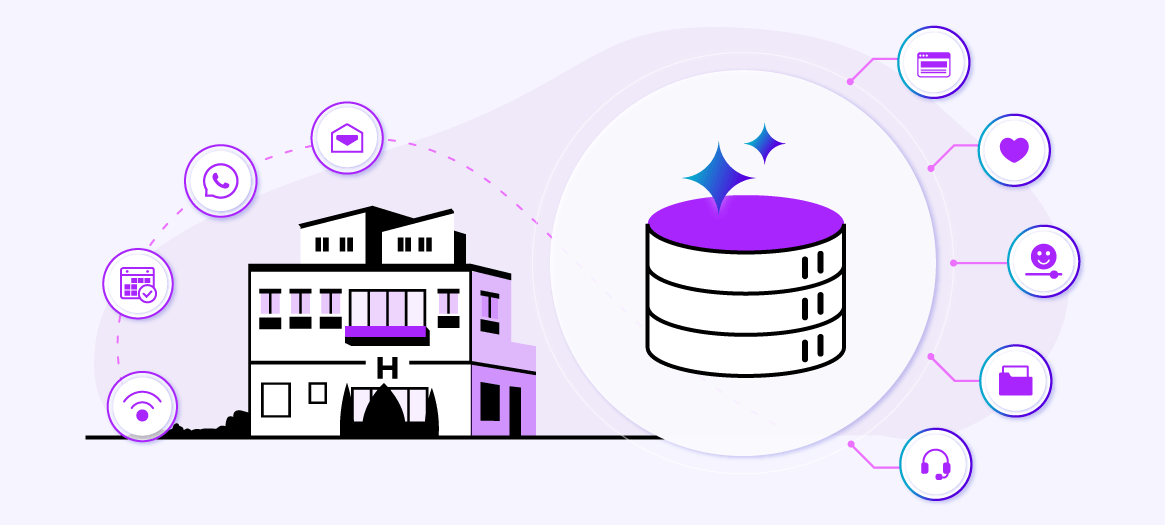
In this context, the concept of omnichannel CRM is becoming increasingly important. It is not just about sending campaigns through several channels, but about connecting data, moments in the journey and touchpoints to build a more coherent, personalised and useful relationship with each guest.
What is an omnichannel CRM?
An omnichannel CRM is a solution that allows businesses to manage customer relationships across different connected channels.
In the case of a hotel, this means that guest communication does not depend on a single tool or isolated actions. The goal is to bring together relevant information and activate communications adapted to each person’s timing, profile and behaviour.
An omnichannel CRM can help coordinate messages before arrival, during the stay and after check-out, using channels such as email, WhatsApp, chatbot, WiFi, forms, booking engine or loyalty programmes.
The key is ensuring that all these channels do not operate as independent pieces, but as part of a single guest relationship strategy.
Why omnichannel communication is especially important for hotels
The relationship between a hotel and its guest does not begin at reception or end at check-out.
Before the stay, the guest may interact with the website, booking engine, email campaigns, adverts, forms or informational messages. During the stay, they may connect to WiFi, write via WhatsApp, check services, answer surveys or use an app. After departure, they may receive loyalty communications, promotions, satisfaction surveys or campaigns for future bookings.
Each of these moments generates valuable information.
When that information is not connected, the hotel loses the ability to better understand the guest and communicate in a relevant way. For example, it may send a generic campaign to a returning guest, fail to use data from a previous stay or be unable to distinguish between a leisure guest, a business traveller, a couple or a family.
An omnichannel CRM helps reduce precisely this fragmentation.
The difference between a hotel CRM and an omnichannel CRM
A hotel CRM is designed to respond to the specific needs of the hotel sector. Unlike a generic CRM, it must take into account bookings, stays, PMS data, booking engine data, guest preferences, pre-stay and post-stay communications, loyalty campaigns and direct sales opportunities.
An omnichannel CRM also adds a connected view of channels. It is not limited to storing contacts or sending emails, but makes it possible to coordinate the relationship with the guest across different touchpoints.
That is why, when we talk about an omnichannel hotel CRM, we are talking about a solution that brings together two needs: understanding the guest better and communicating with them consistently at all relevant moments of their journey.
This distinction matters because many hotels already have data, tools and channels. What they need now is to connect them more effectively.
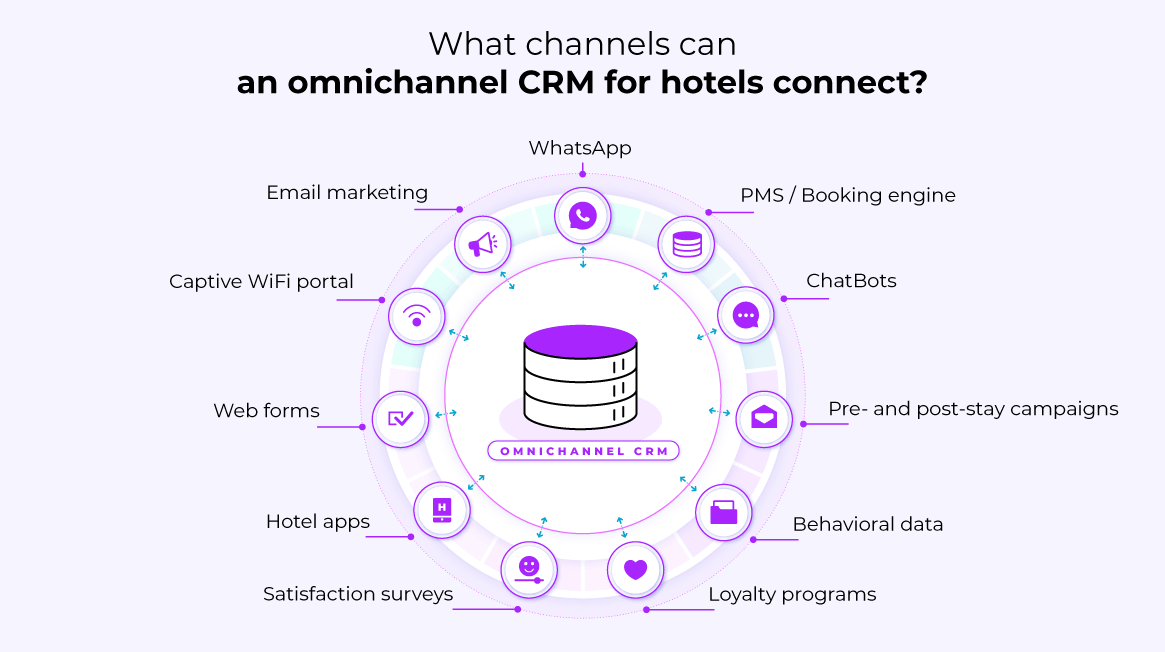
Which channels can an omnichannel CRM for hotels connect?
Each hotel or hotel group may have a different technology structure, but an omnichannel CRM for hotels should be able to work with several of these channels and sources of information:
- PMS.
- Booking engine.
- Email marketing.
- WhatsApp.
- Chatbots.
- Web forms.
- Captive WiFi portal.
- Hotel apps.
- Loyalty programmes.
- Satisfaction surveys.
- Pre-stay campaigns.
- Post-stay campaigns.
- Behavioural and interaction data.
The value does not lie only in connecting many channels, but in ensuring that those channels share a common logic.
For example, a pre-stay campaign can be based on booking data; communication during the stay can be adapted to the type of guest; and a post-stay campaign can take into account the experience, recurrence or level of loyalty.
Benefits of an omnichannel hotel CRM
An omnichannel hotel CRM can add value across different areas of a hotel’s strategy.
1. Better centralisation of guest data
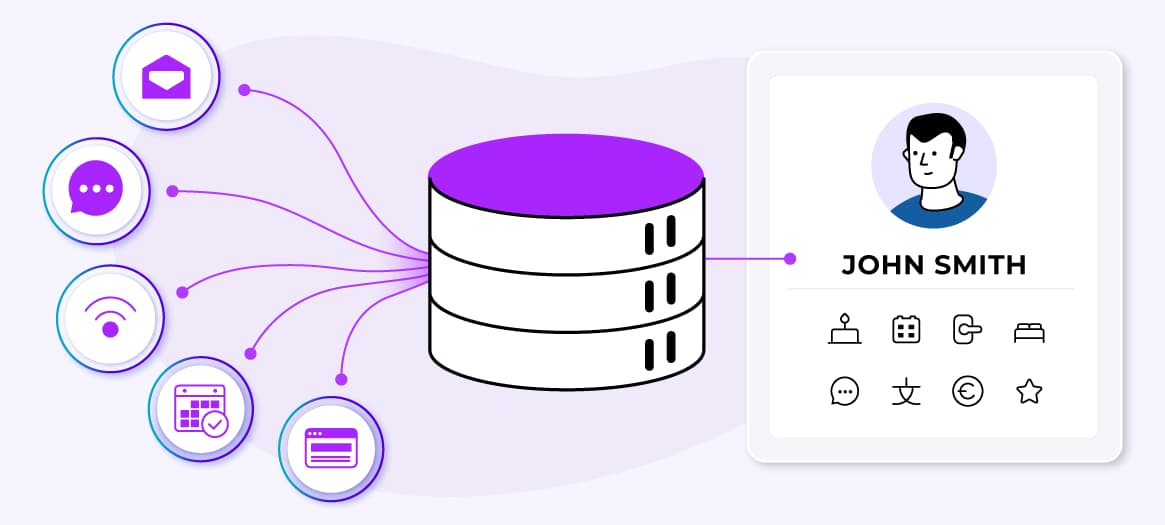
Data is often spread across systems. The PMS may contain operational information, the booking engine purchase data, WiFi connection data, email marketing interaction data and WhatsApp conversational information.
An omnichannel CRM makes it possible to move towards a more complete view of the guest and work with more useful information for communication, segmentation and loyalty.
2. Improved segmentation
Not all guests have the same needs or respond to the same campaigns in the same way.
With a more connected view of data, the hotel can create more precise segments: returning guests, direct customers, families, couples, business travellers, users interested in specific services, inactive customers or profiles with a higher probability of returning.
This allows campaigns to be more relevant and less generic.
3. Personalised communication
Personalisation is not just about including the guest’s name in an email. It also means sending the right message, through the right channel and at the right moment.
An omnichannel CRM can help adapt communications according to the moment in the journey: before arrival, during the stay or after check-out.
4. Automating campaigns without losing context
Automation delivers value when it is based on reliable information and clear processes.
With an omnichannel hotel CRM, the hotel can automate recurring communications without making them feel isolated or out of context. For example, pre-stay campaigns, reminders, segmented promotions, welcome communications, surveys or loyalty actions.
5. Strengthening the direct relationship with the guest
One of the major challenges for hotels and hotel groups is building a more direct relationship with their guests.
An omnichannel CRM can help reduce dependence on fragmented communications and strengthen owned channels such as the website, email, WhatsApp, WiFi or loyalty programmes.
This not only improves the guest experience, but can also help generate more direct bookings and greater recurrence.
How to start working on an omnichannel CRM strategy
Not every hotel needs to connect every channel from day one. In fact, trying to do everything at once can create unnecessary complexity.
An omnichannel CRM strategy can begin progressively:
- Identify which channels are currently used to communicate with guests.
- Review where the most important data is stored.
- Identify key moments in the guest journey.
- Define priority segments.
- Start by automating simple, measurable communications.
- Review results before scaling.
- Add new channels gradually.
Omnichannel should not be understood as an obligation to be everywhere, but as a way to better connect the channels that truly add value for the hotel and the guest.
A necessary foundation for applying AI with purpose
An omnichannel CRM is not the end point of a guest relationship strategy, but the foundation on which to build more intelligent communication. When a hotel connects its data, channels and key moments in the journey, it starts to generate the context technology needs in order to truly help.
That context is especially important today, as artificial intelligence begins to be incorporated into service, segmentation, automation and personalisation processes. AI can help identify patterns, anticipate needs, adapt messages, prioritise opportunities, assist human teams and reduce repetitive tasks. But all that potential depends on one prior condition: guest information must be organised, connected and genuinely actionable.
That is why, before thinking about major automations or advanced assistants, hotels need to ask whether their data and channels are ready to work together. An omnichannel hotel CRM helps move in that direction: it turns scattered interactions into a more useful foundation for communicating better, making decisions with more context and preparing the hotel for new forms of guest relationship supported by AI.
In a sector where the experience still depends largely on human service, technology should not replace that relationship, but help make it more relevant, agile and personalised.
AI will only be truly useful for a hotel if there is first a solid foundation of data, context and omnichannel communication.