The Network Starts Warning Before the Customer Does: Proactive Operations with Real Data
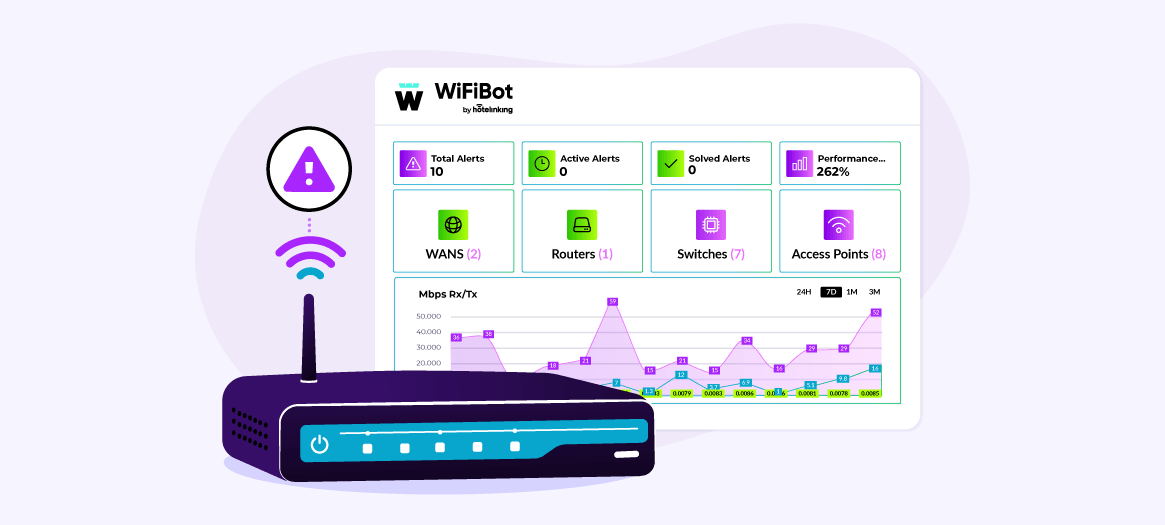
Many network incidents are still first noticed the least efficient way: a guest complaint or a call from the front desk. Before that happens, the network is usually already showing signs in its own metrics. WiFiBot correlates events, learns baselines of normal behavior, and flags deviations before they cross a critical threshold, feeding every alert into the ticketing and messaging tools the technical team already uses.

Want to see more of Hotelinking’s content on Google?
In many network operations, an incident is still discovered the same way it always has been: a guest complains at the front desk, a hotel manager calls the technical support line, someone opens a ticket from another department. By the time that call comes in, the network has usually already been showing the same signal in its metrics for a while — sometimes for hours.
The problem isn’t that the network failed to warn anyone. It’s that the warning never reached anyone in time, or reached them without enough context to act.
The important question is no longer just whether the network raises alerts. It’s whether those alerts reach the right person, on the right channel, with enough information to resolve the issue before it escalates.
That’s the difference between reactive and proactive operations: it isn’t only about detecting problems earlier. It’s about making sure that detection turns into action, in the place where the technical team actually works.
An alert with nowhere to go isn’t worth much
Many monitoring platforms generate alerts correctly. The problem shows up afterward: the alert sits on a dashboard nobody is watching at that moment, gets lost among dozens of similar notifications, or lands in a channel the on-call team doesn’t check.
When that happens, it doesn’t matter that the network detected the problem early. The practical outcome is the same as if it hadn’t: the guest calls, the front desk raises the alarm, and the technical team finds out through the least efficient route possible.
An alert only has operational value if it meets three conditions: it reaches someone, it reaches them with context, and it reaches the channel where that person will actually see it.
From scattered events to a signal that means something
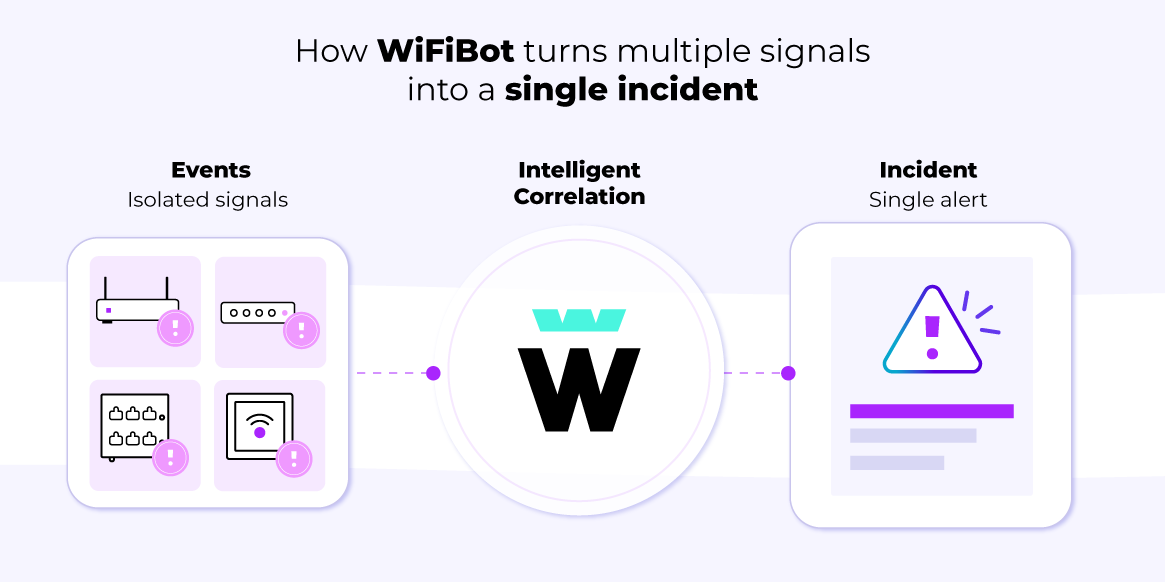
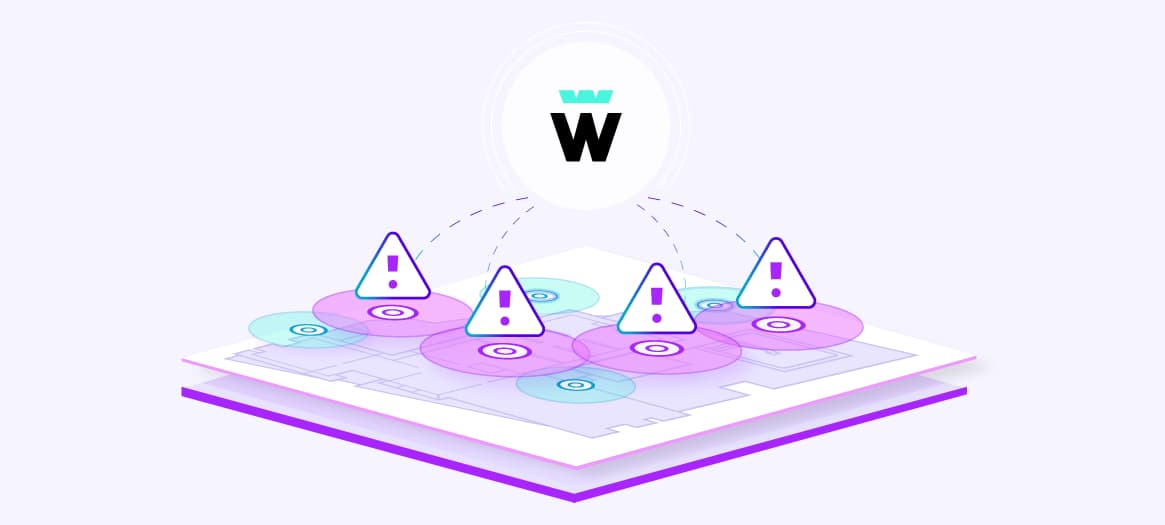
In a complex network, events rarely happen in isolation. Optical degradation on an ONT, a load spike on the access points on the same floor, and a latency spike on the link serving that area can all be symptoms of the same underlying problem.
Seen individually, each event looks minor. Seen together, the correlation points to something else: a specific area of the hotel is degrading, and probably for a shared reason.
Correlating events means exactly that: no longer treating every alert as an isolated fact, and instead asking what the events that happen close together in time, on the same network segment, or on the same service, have in common.
This changes the way the team works. Instead of receiving ten separate alerts, the team receives one incident with context: which devices are involved, since when, and how they relate to each other.
Baselines: teaching the network what “normal” looks like
To detect an anomaly, you first need to know what’s typical. Not every variation is a problem, and not every value inside range is necessarily correct.
A floor may carry more load on weekends. A link may show higher latency during check-in hours. An ONT may run at a slightly different optical power than the rest without that being, on its own, a fault.
Working with baselines of normal behavior — by site, by device, by time of day — makes it possible to tell expected variation apart from a real deviation. That distinction avoids two opposite problems: missing an important warning in the noise, or raising an alarm over something that’s simply part of how that installation normally behaves.
Predictive detection on the data you’re already collecting
Anticipation doesn’t require monitoring more things. It requires interpreting what’s already being monitored more effectively.
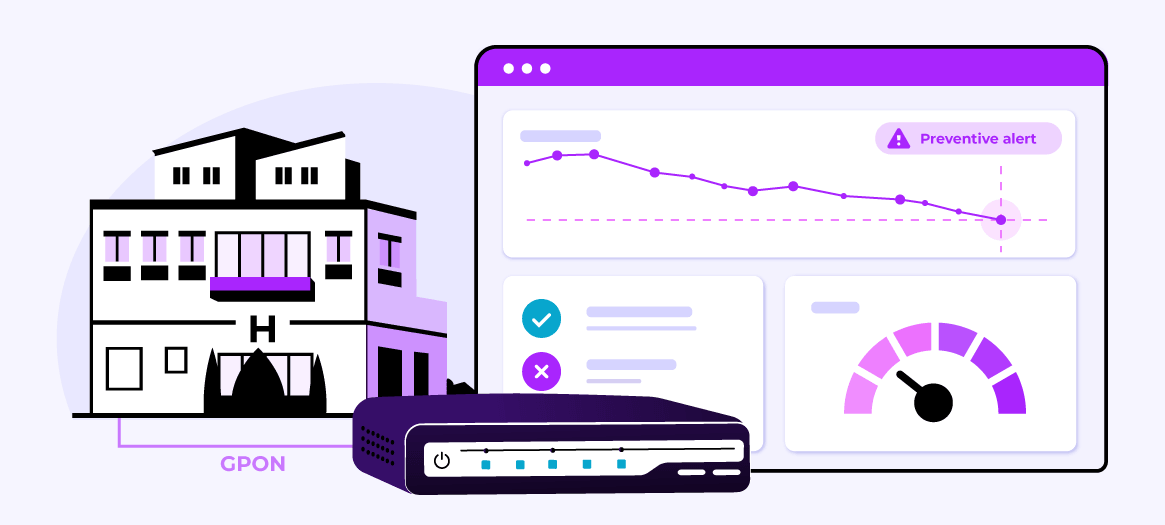
The same metrics that already capture optical quality, access point load, link performance, or service status can be analyzed predictively: not just what value they show now, but where they’re heading.
Optical power that’s degrading steadily, even if it hasn’t crossed the critical threshold yet, is a predictive signal. Load that keeps growing consistently on the same access points is another. The goal of predictive detection is to raise the alert at that stage — before the value crosses the threshold and turns into a confirmed incident.
This doesn’t replace traditional thresholds. It complements them: a threshold warns when something is already wrong; predictive detection warns when something is starting to go wrong.
Getting the alert where the team already works
Anticipating a problem is of little use if the alert stays inside the monitoring platform. Integration with the tools the team uses every day is what turns early detection into an early response.
That means a relevant event can automatically open a ticket in the ITSM system, already including the affected device, the recent history, and the detected trend. It can also be pushed directly to the corporate messaging tool the on-call team uses, without anyone having to go check it manually.
The rule is simple: the notification should show up where the technical team is already looking, not in one more place they need to remember to check.
Traceability starts the moment the alert fires
When an alert arrives already integrated with its context — device, location, history, trend, and related events — the alert itself records how the incident started and how it evolved.
That has an effect that goes beyond the immediate response. When it’s later necessary to review why something happened, how long it took to detect, or whether it could have been prevented, that information is already recorded from the very first moment, without depending on someone reconstructing it afterward from memory or scattered conversations.
Less noise, more real impact
One of the risks of automating alerts is generating more noise, not less. If everything notifies with the same priority, the team ends up ignoring the whole channel.
That’s why event correlation and baselines aren’t just anticipation mechanisms. They’re also filtering mechanisms: they group related events into a single incident, discard variations that fall within the expected range, and reserve immediate notification for what actually represents a risk.
The result is a team that receives fewer alerts, but more relevant ones. And that, in practice, is what allows anticipation to hold up over time without turning into alert fatigue.
WiFiBot: anticipation as part of daily operations
WiFiBot builds event correlation, baselines of normal behavior, and predictive detection directly into the metrics it already collects from the network: optical quality, load, link performance, and service status.
When an event crosses the relevance threshold, WiFiBot can automatically open a ticket in the team’s ITSM system or notify the corporate messaging tool already in use, with the context needed to start working without reconstructing the situation from scratch.
This doesn’t remove the need to intervene. What it does is move up the moment the technical team finds out about the problem, and make sure they find out through the right channel.
Conclusion: anticipating also means knowing how to warn well
Anticipating an incident doesn’t depend only on detecting it earlier. It depends on that warning reaching whoever has to act, with enough context, through the channel where that team actually works.
A network can have all the telemetry in the world and still be reactive, if its alerts get lost on a dashboard nobody checks at that hour.
That’s why proactive operations require three pieces working together: event correlation to separate signal from noise, baselines to know what’s normal at each site, and integration with the team’s tools so the alert reaches where it needs to reach.
When those three pieces work together, the network starts warning before the customer does. And that, in practice, is the difference between operating on data and operating blind until the phone rings.